Birds
Yellowhammer
Emberiza citrinella · Presură galbenă
A yellow bunting of hedges and scrubby farmland.
At a glance
- Status in Romania
- Resident
- Habitat
- Meadow
- Activity
- Morning · Daytime
- Diet
- Mainly seeds, but chicks are fed mostly animal food.
- Conservation status
- Least Concern (IUCN)
- Photography difficulty
- Easy to observe
Photography Guide
Practical starting points based on the species’ behaviour and habitat, not fixed rules.
- Where and how to look
- Hedgerows and scrubby pastures, especially in Transylvania.
- Best time / activity
- Morning · Daytime
- Photography difficulty
- Easy to observe
- Ethics
- Ground-nesting bird: stay on tracks and field edges in the breeding season and never search grass for nests.
Identification
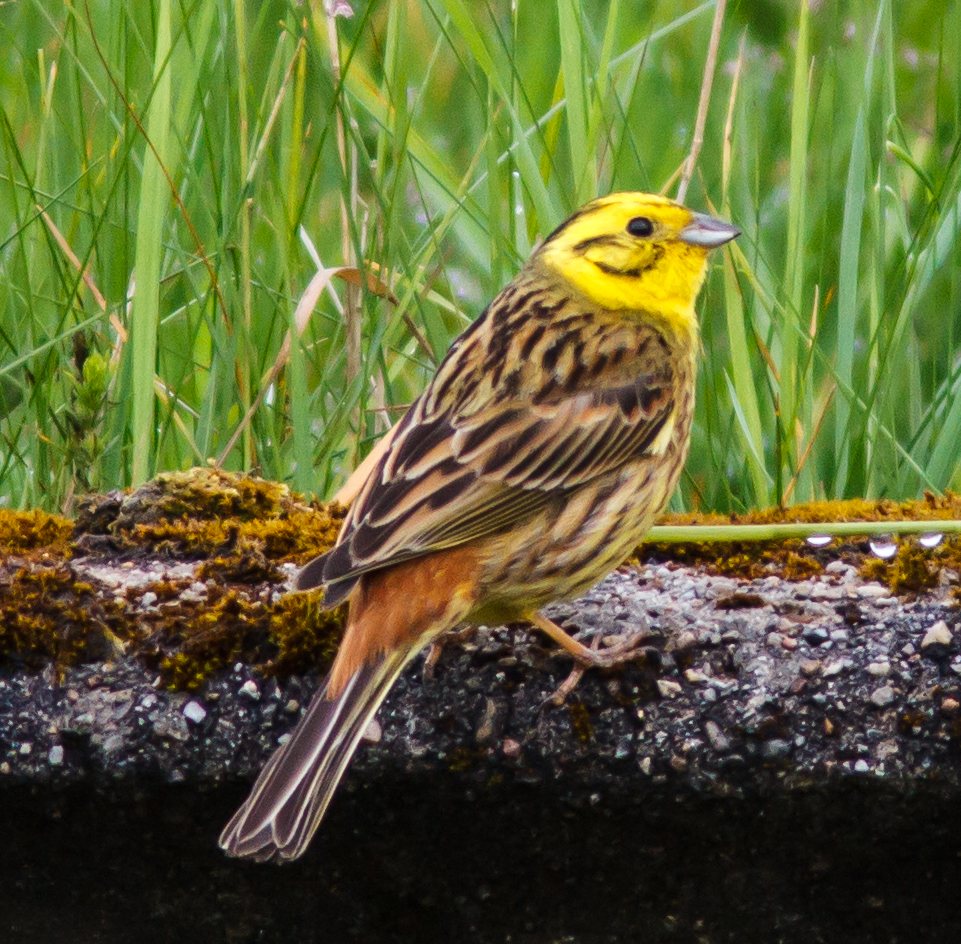
The male has a bright yellow head and underparts and a chestnut rump; the female is duller and streakier.
Habitat
In the northern half of the country and the piedmont zones: open habitats such as meadows with scattered bushes, extensive scrub, regenerating woods and field edges.
Approximate range in Romania
Diet
Mainly seeds, but chicks are fed mostly animal food.
Behaviour
Males sing from the tops of bushes and wires.
Seasonality in Romania
Breeds in Romania and is resident. In cold periods it moves in small groups depending on food, with possible influx from the north.
- JanPresent
- FebPresent
- MarPresent
- AprPresent
- MayPresent
- JunPresent
- JulPresent
- AugPresent
- SepPresent
- OctPresent
- NovPresent
- DecPresent
Source-verified months inform the seasonal filters. Local timing can vary. Unconfirmed months do not imply absence. * Event timing retained from the earlier entry, not yet source-verified.
Breeding
Breeding begins in April; 2–3 clutches a year of 3–5 eggs incubated by the female for 12–14 days.