When the Water Returns: Rainwater, Temporary Ponds and the Future of Văcărești's Wetlands
A European pilot project plans to reuse rainwater collected from Sun Plaza to help restore temporary wetlands in Văcărești Nature Park. For someone who returns here almost every week with a camera, it raises a bigger question: what could the return of water mean for the wildlife that depends on this place?
In this article (11)
- Returning to Văcărești
- When the water changes
- A new source of water next door
- How the NATALIE pilot is supposed to work
- Why temporary ponds matter
- What birds have taught me about water
- Photography as a record of change
- What I will be watching in 2027
- Following the project
- Why I keep returning
- Sources & further reading
Returning to Văcărești
I go to Văcărești about once a week. It is the place where I learned wildlife photography, and the place where I understood that you do not need to drive 100 kilometres away from a city to find and photograph wildlife. Discovering how much lives inside Bucharest itself is a big part of why this park matters to me.
For a wildlife photographer, water is not just part of the background of a photograph. It is part of the habitat that makes the photograph — and the wildlife in it — possible. That is why a small rainwater project announced this month caught my attention.
When the water changes
Because I keep returning to the same place, I have started to notice patterns I would probably miss on occasional visits — in how birds behave, and in how the landscape changes through the seasons.
In spring 2026, I remember some of the paths being flooded. By summer, some of those same areas, and the ground around them, had become very dry. This is simply what I saw on my own visits. It is not a measurement, and I do not present it as evidence of a long-term trend.
A new source of water next door
The organisations involved describe the problem in their own words: the NATALIE case study for Văcărești speaks of temporary ponds — habitats for amphibians and specific flora — lost in recent years, and Asociația Parcul Natural București refers to drying (aridification) and biodiversity loss observed in the park over the last ten years.
Their answer is a pilot project: rainwater collected from the roof of Sun Plaza, the shopping centre next to the park, will be used to help restore a network of temporary wetland ponds in Văcărești Nature Park.
How the NATALIE pilot is supposed to work
According to the project partners and the reporting of 10 November 2026:
- Rainwater from the Sun Plaza roof is collected and stored in a retention basin.
- It is pumped through a buried pipe — about 245 metres long — to the edge of the park.
- At the base of the embankment, three biofilters clean the water through filter layers and plant roots.
- The filtered water then reaches the temporary ponds in a controlled way. Three ponds are planned, each of roughly 100 square metres.
Works on the installation began in early October 2026. Dan Bărbulescu, director of Asociația Parcul Natural București, said the team hopes to finish by the end of November so that the system can operate from spring 2027, after it has been connected and tested. He described the expected impact as local — "punctual, dar important". The Bucharest mayor also said the Sun Plaza water will cover only part of the park's needs.
The pilot is part of NATALIE, a European project that tests and monitors nature-based solutions — interventions that use natural processes — to help regions adapt to climate-related problems such as droughts and floods. It is funded by the European Union's Horizon Europe programme, under the EU Mission on Adaptation to Climate Change, and runs from September 2023 to August 2028. In Romania, the partners include Asociația Parcul Natural București, Administrația Parcului Natural Văcărești, Sun Plaza, Primăria Sectorului 4, Business Development Group, Field Factors and Apele Române.
Why temporary ponds matter
A temporary pond does not look like much. It fills with water for part of the year and may dry out later. But that cycle is exactly what makes it valuable: because temporary ponds regularly dry out, they often lack established fish populations, which reduces predation pressure on amphibian eggs and larvae. Many amphibians therefore depend on shallow, seasonal water to breed.
The association names four species targeted by the Văcărești intervention:
- Great crested newt (tritonul cu creastă) — Triturus cristatus
- Smooth newt (tritonul comun) — Lissotriton vulgaris
- European green toad (broasca râioasă verde) — Bufotes viridis
- European fire-bellied toad (izvorașul de baltă cu burta roșie) — Bombina bombina
These are not birds I photograph every week, and they are easy to overlook. That is part of the point: some of the most important things in a wetland are small, hidden and seasonal.
What birds have taught me about water
One of my most interesting observations in Văcărești has been Black-headed Gulls nesting in significant numbers in areas with very shallow water. That is what I saw. What the literature says is broader: Black-headed Gulls usually nest in colonies near calm, shallow water — in marshes along ponds and lakes — typically on the ground in low vegetation, and sometimes on emergent vegetation in shallow water.
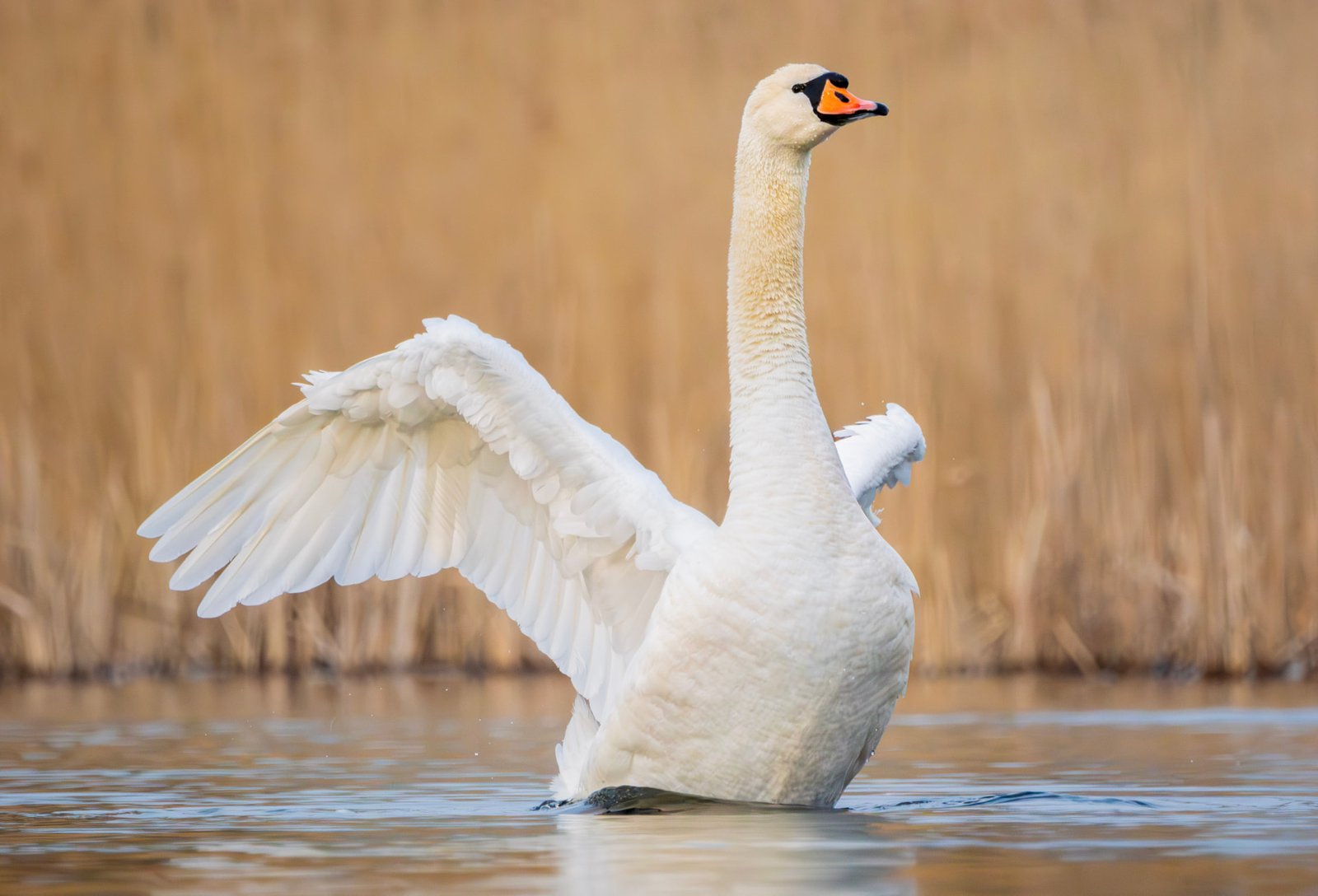
Other birds I strongly associate with the wetlands of Văcărești are the Eurasian Coot — one of the birds I meet there most often — the Northern Shoveler, the Common Pochard and the Mute Swan.
I do not expect the NATALIE ponds to change the numbers of any of these birds, and nothing in the project says they will. Three ponds of about 100 square metres are aimed first at amphibians. But water level, vegetation, food and the structure of a wetland all influence how birds use an area, so it will be interesting to see, over time, whether anything changes in the corners of the park I know.
- Black-headed Gull — Wildlife Encyclopedia
- Eurasian Coot — Wildlife Encyclopedia
- Northern Shoveler — Wildlife Encyclopedia
- Common Pochard — Wildlife Encyclopedia
- Mute Swan — Wildlife Encyclopedia
Photography as a record of change
When I started wildlife photography, I was mainly looking for animals. Over time, I began looking at the environment around them too. Returning again and again teaches you to notice change: where birds feed, where they rest, where they nest, how their behaviour shifts through the seasons, where water remains and where it disappears, how the vegetation changes, and which species appear at different times of the year.
Photographs can become a useful visual record of those changes. But photography does not replace ecological monitoring, population surveys or scientific research. The photographer observes and documents. Scientists and conservation organisations measure and interpret change systematically. My photographs from Văcărești will never prove that the project worked or didn't.
What I will be watching in 2027
- Water levels — whether the restored ponds hold water, and how they look through spring and summer.
- Biodiversity — whether there are visible positive effects for wildlife. That is something to observe, not to assume; the project's scientific monitoring is what should eventually evaluate it.
- Bird behaviour — whether birds start using the restored areas differently.
- Amphibians — the main conservation targets. I want to follow what the official monitoring finds about their use of the ponds.
- Vegetation and insects — less visible, but part of the same wetland food web.
Following the project
This note is the start of a longer personal photographic record — not a scientific monitoring programme.
- 2026 — Before implementation: baseline photographs and observations.
- 2027 — The first season after the system is expected to start operating.
- Later — Continued photographic observations, and possibly a second Field Note comparing the area before and after.
The project's long-term success will depend on how the system performs and on what future monitoring shows. What interests me most is exactly that: whether an intervention like this can help Văcărești keep working as a wetland, rather than offer a short-term fix. For me, Văcărești is one of Bucharest's most important natural areas — an urban protected wetland surrounded by a large city, and a real refuge for urban biodiversity.
Why I keep returning
Văcărești taught me that wildlife photography does not begin with finding an extraordinary animal somewhere far away. Sometimes it begins by returning to the same place, week after week, and slowly learning how that place works.
The animals I photograph there depend on things that rarely become the subject of the photograph: water, vegetation, insects, shelter, a habitat that works. That is why I want to keep returning as this project develops.
Sources & further reading
- NATALIE — DS#2 Văcărești Natural Park — objectives and planned activities.
- Asociația Parcul Natural București — Adunarea Generală NATALIE, 10 Nov 2026 — Romanian partners, target species, mechanism.
- CORDIS — NATALIE, grant 101112859 and EU Mission on Adaptation portal — Horizon Europe funding and project dates.
- AGERPRES, 10 Nov 2026 — retention basin, 245 m pipe, three biofilters, three ponds of about 100 m².
- G4Media, 10 Nov 2026 — works started in early October; operation expected from spring 2027.
- Cornell Lab — Black-headed Gull life history — nesting habitat.
- Mass.gov — Vernal pools — why seasonal ponds without fish matter for amphibians.
Continue exploring
Questions about the photos, the settings or the gear?
Write to me below — I read every message and reply when I'm back from the field. You can also email me directly at nick.usor.peter@gmail.com.
Wild By Nick — field note by Nick Ungureanu. All photographs by Nick Ungureanu.