Insects
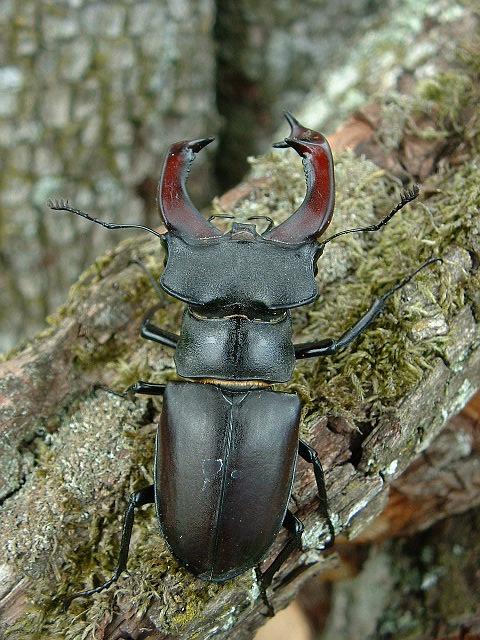
European Stag Beetle
Lucanus cervus · Rădașcă
Europe's largest beetle; males carry huge antler-like jaws used in fights with rival males.
At a glance
- Habitat
- Forest
- Activity
- Evening
- Diet
- Larvae feed on decaying wood for several years; adults feed on sap and fluids.
- Photography difficulty
- Moderate
Identification
Dark brown to black. Males have enlarged reddish-brown mandibles; females are smaller with small jaws.
Habitat
Old oak and other deciduous woodland with decaying wood.
Distribution
Much of Europe, including Romania.
Approximate range in Romania
When it is active
Evening
Diet
Larvae feed on decaying wood for several years; adults feed on sap and fluids.
Behaviour
Adults live only a few weeks in early summer and often fly at dusk.
Seasonality in Romania
How to find it
Old oak woods on warm early-summer evenings.
Photography
General guidance based on the species’ behaviour, not a report of Nick’s personal field experience.
- Difficulty
- Moderate
- Ethics
- Leave dead wood in place; it is the larvae's habitat.
Practical starting points, not fixed rules.