Birds
White-throated Dipper
Cinclus cinclus · Pescărel negru
A stocky songbird that walks and swims underwater in fast mountain streams.
At a glance
- Status in Romania
- Resident
- Habitat
- Mountain / Wetland
- Activity
- Morning · Daytime
- Diet
- Aquatic invertebrates such as larvae and crustaceans; occasionally fish eggs and small fish.
- Conservation status
- Least Concern (IUCN)
- Photography difficulty
- Moderate
Photography Guide
Practical starting points based on the species’ behaviour and habitat, not fixed rules.
- Where and how to look
- Walk mountain streams and watch the boulders; it flies low and fast along the water.
- Best time / activity
- Morning · Daytime
- Behaviour to anticipate
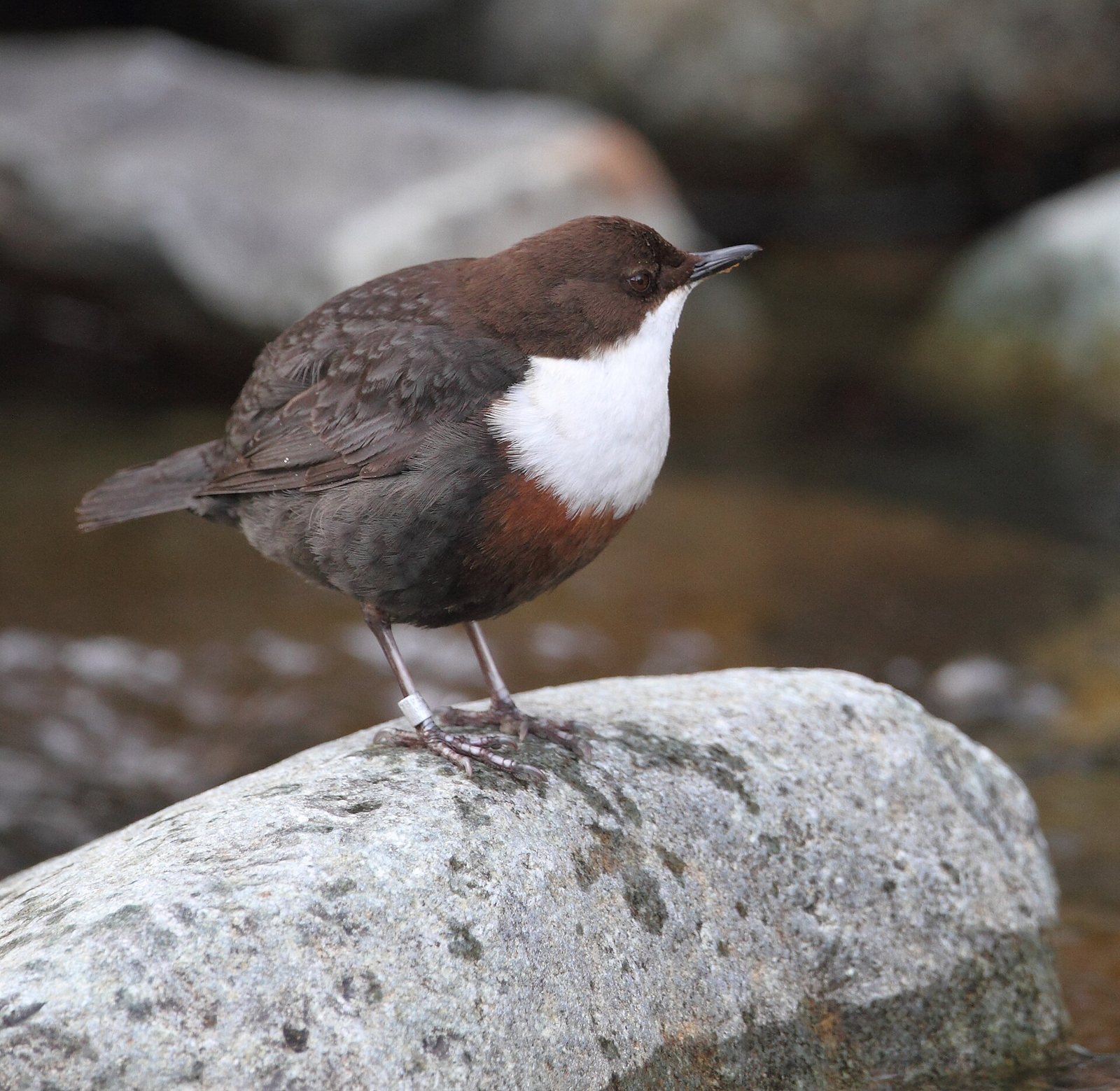
- Bobbing on a rock before diving, and emerging with prey.
- Photography difficulty
- Moderate
- Starting shutter speed
- 1/1000–1/2000 sec to freeze water drops; slower speeds can blur the stream deliberately.
- Fieldcraft
- Sit still low by the bank; dippers return to favourite rocks.
- Ethics
- Keep away from nests, do not use playback in the breeding season, and let the bird decide how close it comes.
Identification
Dark brown, wren-shaped bird with a bright white throat and breast. Often bobs on stones.
Habitat
Fast, shallow mountain rivers and streams, often wooded, with exposed rocks and boulders.
Distribution
Across all mountain areas of Romania.
Approximate range in Romania
Diet
Aquatic invertebrates such as larvae and crustaceans; occasionally fish eggs and small fish.
Behaviour
Dives and swims under the current using its wings, and can walk along the riverbed.
Seasonality in Romania
Breeds in Romania and is resident.
- JanPresent
- FebPresent
- MarPresent
- AprPresent
- MayPresent
- JunPresent
- JulPresent
- AugPresent
- SepPresent
- OctPresent
- NovPresent
- DecPresent
Source-verified months inform the seasonal filters. Local timing can vary. Unconfirmed months do not imply absence. * Event timing retained from the earlier entry, not yet source-verified.
Breeding
Breeding starts early, in March; usually 3–6 eggs, incubated by the female for 15–18 days.